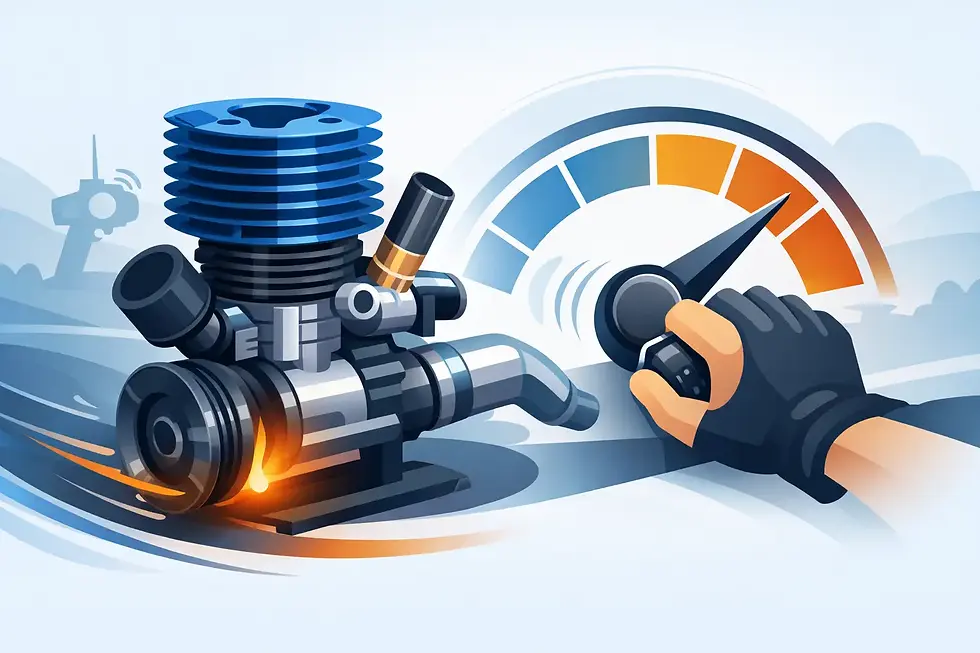
Data-Based Nitro Tuning: Unlocking Peak Engine Performance
- Lucas Milton
- Apr 25
- 3 min read

Nitro engine tuning has evolved significantly with the integration of data analysis. Tuning a nitro engine is no longer a matter of guesswork or trial and error. Instead, it relies on precise measurements and adjustments based on real-time data. This approach improves engine performance, reliability, and consistency on the track.
In this post, I explain the principles of data-based nitro tuning. I cover the tools, techniques, and strategies that serious nitro R/C car racers use to optimize their engines. I also provide actionable tips to help you apply data-driven methods to your own tuning process.
Understanding Data-Based Nitro Tuning
Data-based nitro tuning involves collecting and analyzing engine performance data to make informed tuning decisions. This data includes parameters such as:
Engine temperature
Exhaust gas temperature (EGT)
Air-fuel mixture ratios
RPM and throttle response
Fuel consumption rates
By monitoring these variables, you can identify how the engine behaves under different conditions. This insight allows you to adjust carburetor needles with precision.
For example, if the EGT is too high, it indicates a lean mixture that risks engine damage. Conversely, a low EGT suggests a rich mixture that reduces power and efficiency. Data-based tuning helps you find the optimal balance for maximum power and engine longevity.
Tools and Equipment for Data-Based Nitro Tuning
To implement data-based nitro tuning, you need the right tools. These tools collect accurate data and provide actionable feedback. Essential equipment includes:
Digital Temperature Sensors - Measure cylinder head and exhaust temperatures.
Data Loggers - Record temperature, RPM, and other sensor data during runs.
Wideband Air-Fuel Ratio Sensors - Provide real-time mixture readings.
Tachometers - Track engine RPM precisely.
Tuning Software - Analyze collected data.
Using these tools, you can monitor engine conditions continuously. This eliminates guesswork and speeds up the tuning process. For instance, a data logger paired with temperature sensors can reveal how the engine heats up during a run, helping you adjust needle settings accordingly.
Step-by-Step Data-Based Nitro Tuning Process
The tuning process follows a systematic approach. Here is a step-by-step guide to applying data-based nitro tuning:
Install Sensors and Equipment
Attach temperature sensors to the cylinder head and exhaust pipe. Connect the data logger and ensure all devices are calibrated.
Perform Baseline Runs
Run the engine under typical conditions and record data. Note RPM, temperatures, and air-fuel ratios.
Analyze Data
Review the recorded data to identify trends. Look for signs of lean or rich mixtures, overheating, or inconsistent RPM.
Adjust Carburetor Settings
Modify the high-speed and low-speed needle valves based on data insights. For example, if the EGT is high, enrich the mixture by opening the needle valve slightly.
Test and Repeat
Run the engine again with new settings. Collect data and compare it to previous runs. Continue adjusting until the engine operates within optimal parameters.
Fine-Tune for Conditions
Adjust tuning based on temperature, humidity, and altitude. Data helps you adapt quickly to changing environments.
This process ensures that tuning is precise and repeatable. It reduces the risk of engine damage and improves lap times.

Common Challenges and How Data Helps Overcome Them
Tuning nitro engines presents several challenges. Data-based tuning addresses these effectively:
Inconsistent Engine Performance
Data reveals fluctuations in temperature or RPM that cause inconsistent power delivery. Adjustments can stabilize performance.
Engine Overheating
Monitoring EGT prevents overheating by signaling when the mixture is too lean.
Poor Fuel Efficiency
Air-fuel ratio data helps optimize fuel consumption without sacrificing power.
Environmental Variability
Data allows quick tuning changes to compensate for weather differences.
By relying on data, you avoid subjective judgments and improve tuning accuracy. This leads to better engine reliability and race results.
Practical Tips for Implementing Data-Based Nitro Tuning
To get the most from data-based nitro tuning, follow these practical tips:
Start with a Baseline Tune
Begin with manufacturer-recommended settings before collecting data.
Use Quality Sensors
Invest in reliable sensors and data loggers for accurate readings.
Record Multiple Runs
Collect data over several runs to account for variability.
Keep Detailed Logs
Document settings, conditions, and results for future reference.
Adjust Incrementally
Make small tuning changes and observe their effects.
Monitor Engine Health
Use data to detect early signs of wear or damage.
Stay Consistent
Use the same data collection methods to compare results over time.
Applying these tips will streamline your tuning process and improve engine performance.
Moving Forward with Data-Based Nitro Tuning
Adopting data-based nitro tuning transforms how you approach engine setup. It provides clarity, precision, and confidence. By leveraging data, you can push your nitro engine to its limits safely and consistently.
For those serious about maximizing performance, embracing data-driven methods is essential. It aligns with the goal of achieving peak engine power and reliability through professional, informed tuning.
With the right tools, process, and mindset, you can elevate your nitro engine tuning to a new level of excellence.