How to Fix Low Compression Nitro Engine Problems
- Lucas Milton
- 5 days ago
- 6 min read
A nitro engine that suddenly feels easy to turn over is not giving you a complete diagnosis. It is giving you a warning. To fix low compression nitro engine problems correctly, separate true piston-and-sleeve wear from air leaks, fuel-system faults, clutch drag, and tuning conditions that can create similar symptoms. Compression is part of a system. Treating it as a single-number problem leads to unnecessary parts replacement and inconsistent performance.
For a race engine, the goal is not simply to restore a tight feel at top dead center. The goal is stable combustion, repeatable throttle response, usable power under load, and a service decision supported by evidence.
What Low Compression Actually Looks Like
A healthy nitro racing engine has a noticeable pinch zone near the top of the sleeve. With the glow plug removed and the engine clean, rotating the crankshaft through top dead center should require a distinct, smooth increase in force. That resistance comes from the piston-to-sleeve fit, not from a bearing, clutch, or connecting rod.
When that pinch is gone, starting becomes less consistent. The engine may flame out when the glow igniter is removed, struggle to hold a clean idle, feel soft off the corner, or require an increasingly lean needle setting just to stay responsive. Hot restarts can also become difficult because the worn piston and sleeve seal less effectively as operating temperature rises.
Those signs matter, but none proves that the piston and sleeve are the only fault. A leaking backplate, damaged carburetor O-ring, loose front bearing, split fuel line, or compromised tank seal can lean the mixture and make an otherwise serviceable engine act tired. Before ordering a piston and sleeve, verify what the engine is actually doing.
Start With a Controlled Diagnosis
The fastest repair is not always the correct repair. Begin with a clean external inspection, then evaluate the engine in stages.
First, inspect the fuel path from tank to carburetor. Look for hardened tubing, loose connections, damaged pressure line routing, a leaking tank lid seal, or debris restricting the fuel filter. A pressure leak can make the high-speed needle appear inconsistent from one lap to the next. That behavior is often blamed on compression because both conditions produce a weak, unreliable engine.
Next, inspect common air-leak points. The carburetor neck and O-rings, backplate gasket, head button seal, front bearing area, and exhaust coupling all deserve attention. Oil residue around the front bearing or backplate is not automatic proof of a leak, but it is a reason to test further. A proper pressure or leak-down evaluation is more useful than guessing from residue alone.
Then check mechanical condition with the glow plug removed. Rotate the crankshaft slowly. Feel for a defined pinch zone at top dead center, roughness through the bearings, a notch from a damaged rod or crank pin, and excessive connecting-rod play. The piston should not be forced through the pinch zone with tools. If there is a hard mechanical bind rather than normal compression resistance, stop and inspect the engine before running it.
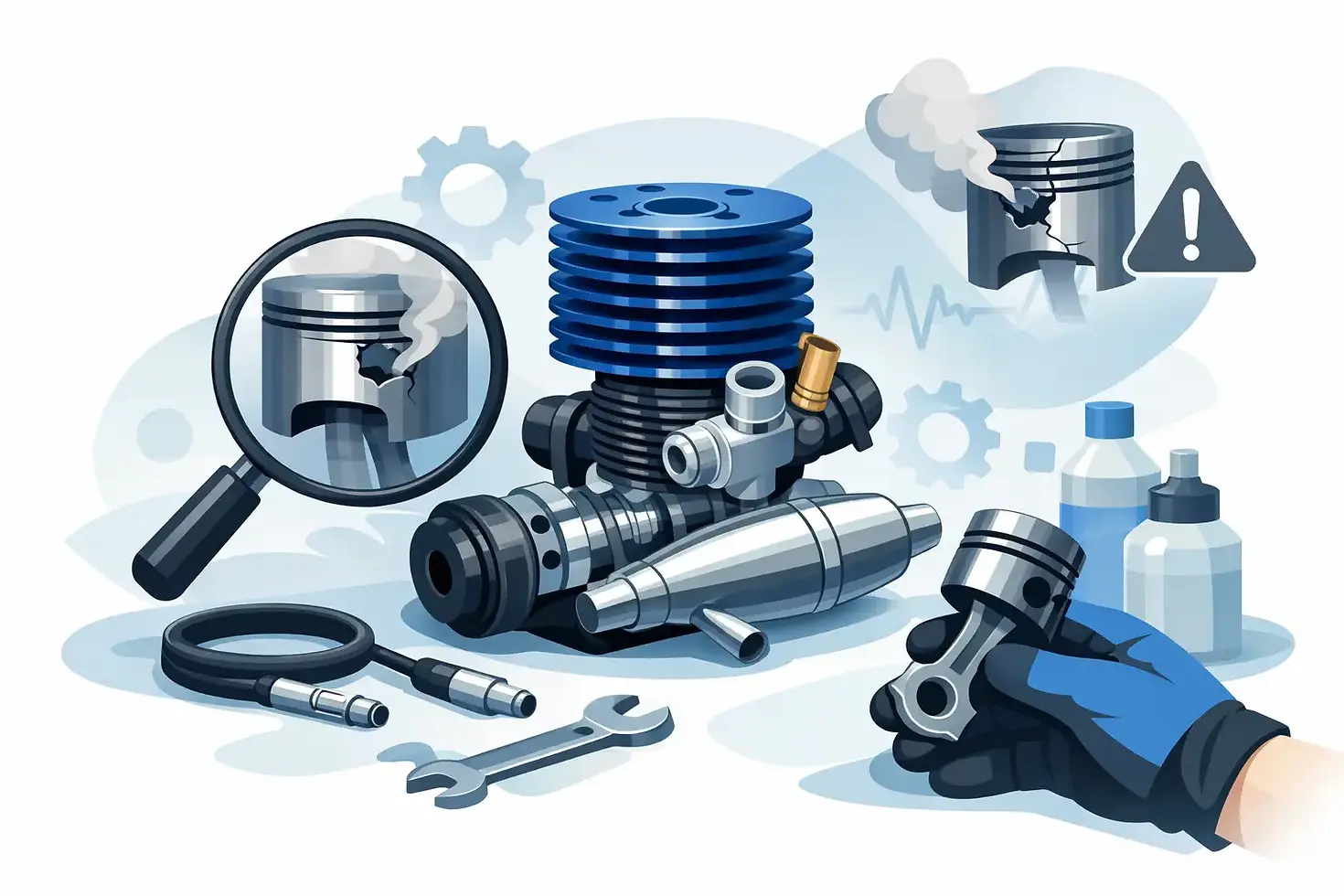
A visual inspection of the piston crown and sleeve through the exhaust port can add useful evidence. Aluminum transfer, deep vertical scoring, discoloration from overheating, or a damaged sleeve coating indicates more than ordinary wear. A brown or dark piston crown alone is not enough to condemn parts. Combustion residue is normal. Surface condition, fit, and measured operating behavior are what matter.
Why Pinch Is Not the Whole Story
Many racers describe compression by feel alone: tight, medium, or worn out. That shorthand has value, but it does not explain how the engine behaves under load.
A cold engine can feel tight because of residual oil, while a worn or distorted sleeve loses seal once it reaches race temperature. Conversely, a properly fitted new piston and sleeve may feel very tight cold but run correctly after a controlled heat-cycle process. The distinction is critical. Excessive cold pinch does not equal race-ready compression, and a free-turning engine is not always finished.
Fuel, plug selection, ambient temperature, gearing, clutch setup, and needle settings affect combustion load and operating heat. If the engine is over-geared or the clutch engages poorly, the driver may chase a perceived compression loss that is actually a load-management issue. If the high-speed needle is too lean, elevated temperature can accelerate piston-and-sleeve wear and reduce compression stability over time.
This is why controlled-load evaluation matters. Bench idling can confirm that an engine starts and runs, but it does not duplicate the combustion pressure, temperature, and transition demand seen on the track. An engine should be assessed where its powerband is doing work.
How to Fix Low Compression in a Nitro Engine
If testing confirms true piston-to-sleeve wear, the correct repair is usually a matched piston-and-sleeve replacement. On some engine platforms, a sleeve can be restored or replaced independently when measurements and manufacturer specifications support that route. It depends on the engine design, the condition of the piston, and whether the crankshaft, rod, bearings, and seals remain within serviceable limits.
Do not install a new piston and sleeve into an engine with a failing front bearing or a leaking backplate and expect a lasting result. Metal contamination from a bearing failure can damage fresh components quickly. An air leak can force a lean condition that overheats the new assembly before it is properly seated.
During a rebuild, inspect the connecting rod carefully. Any significant play at the crank pin, visible wear at the rod ends, or questionable fit deserves attention. A rod failure can destroy a crankcase, piston, sleeve, and crankshaft in one event. Replacing a marginal rod during a compression service is often less expensive than rebuilding after a failure.
Bearings should rotate smoothly without grit, roughness, or corrosion. The front bearing also has a sealing role. A bearing that feels smooth but leaks air at operating temperature can still compromise tuning. Evaluate it as part of the induction system, not as an isolated rotating part.
Use clean assembly practices. Dirt introduced during service becomes abrasive material inside the engine. Confirm gasket condition, carburetor fit, backplate seating, and head fastener torque before the first start. A new piston and sleeve cannot compensate for poor assembly discipline.
Break In Under Load, Not Just at Idle
A fresh piston-and-sleeve assembly needs controlled seating. Extended bench idling is a poor substitute for a disciplined break-in because it provides limited, inconsistent load and can create excessive heat without the airflow and combustion conditions the engine sees on track.
A proper process brings the engine through controlled heat cycles and progressively varied load. Mixture settings should remain safely rich enough to control temperature and maintain lubrication, while the engine is allowed to experience real throttle transitions. The target is a stable piston-to-sleeve interface, not a dramatic peak RPM number during the first tank.
Avoid both extremes. Running excessively rich for too long can load the engine with unburned fuel, create unstable combustion, and delay proper seating. Leaning a new engine aggressively for a sharp sound can score the piston and sleeve before the fit has stabilized. The correct setting is responsive, lubricated, and thermally controlled.
Verify the Repair on the Conditions That Matter
After the repair and break-in process, verify behavior under controlled load. A healthy engine should start consistently, transition cleanly, hold a repeatable tune, and deliver predictable power through the usable RPM range. The high-speed needle should respond logically to adjustment rather than swinging between rich bog and lean fade with minor changes.
Listen for more than peak RPM. A strong race engine pulls cleanly from the bottom, carries through the middle, and remains stable at the end of a run. If it only sounds fast on a stand but falls away after several laps, the system has not been validated.
At Powerband Precision, diagnostics are used to identify the actual condition of compression, fuel delivery, and powerband behavior before additional corrective work proceeds. That process protects the engine owner from replacing parts based on feel alone and provides a clear path from finding to repair.
When Replacement Is Not the Best Value
There is a point where a piston-and-sleeve service is no longer the complete answer. A heavily damaged crankcase, corroded bearings, worn crankshaft journal, compromised rod, and repeated overheating history can turn a simple compression repair into a broader rebuild decision.
For a club engine with a modest service history, a matched piston and sleeve may restore reliable performance. For a race engine that has suffered a bearing failure or chronic lean operation, a full inspection is the better investment. The right answer depends on the condition of the complete rotating assembly and sealing system, not just the pinch at top dead center.
Low compression is not a reason to guess, over-tighten the needles, or keep running until the engine quits. Establish the fault, correct the full system around it, and verify the result under load. That is how an engine earns predictable laps instead of just starting on the pit bench.